There were no fireworks on the sun to welcome in the New Year and only a few C-class flares during the last day of 2014. Instead, the sun starts 2015 with an enormous coronal hole near the south pole. This image, captured on Jan. 1, 2015 by the Atmospheric Imaging Assembly (AIA) instrument on NASA's Solar Dynamics Observatory, shows the coronal hole as a dark region in the south. Coronal holes are regions of the corona where the magnetic field reaches out into space rather than looping back down onto the surface. Particles moving along those magnetic fields can leave the sun rather than being trapped near the surface. Those trapped particles can heat up and glow, giving us the lovely AIA images. In the parts of the corona where the particles leave the sun, the glow is much dimmer and the coronal hole looks dark. Coronal holes were first seen in images taken by astronauts on board NASA’s Skylab space station in 1973 and 1974. They can be seen for a long time, although the exact shape changes all the time. The polar coronal hole can remain visible for five years or longer. Each time a coronal hole rotates by the Earth we can measure the particles flowing out of the hole as a high-speed stream, another source of space weather. Charged particles in the Earth’s radiation belts are accelerated when the high-speed stream runs into the Earth’s magnetosphere. The acceleration of particles in the magnetosphere is studied by NASA’s Van Allen Probes mission. As Solar Cycle 24 fades, the number of flares each day will get smaller, but the coronal holes provide another source of space weather that needs to be understood and predicted.
Image Credit: NASA/SDO Caption: Dean Pesnell
Articoli Correlati



Ultimi Articoli

Boom di nascite all’ospedale Valduce di Como: 33 neonati in sei giorni
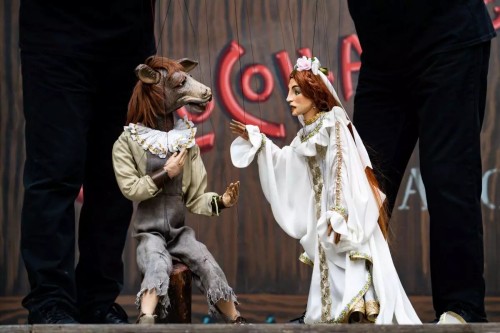
Milano Teatro City, dal 15 al 18 ottobre la prima edizione della maratona teatrale in città
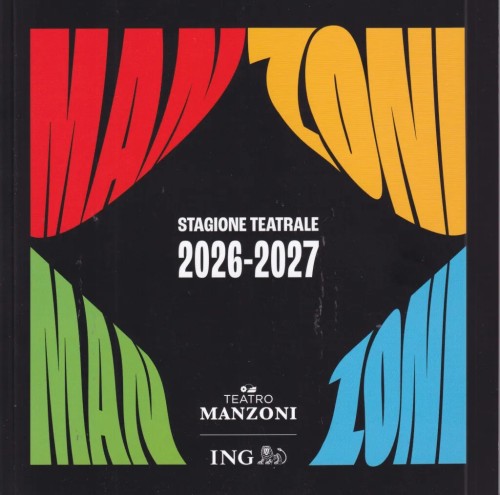
TEATRO MANZONI, LA NUOVA STAGIONE ACCENDE MILANO: OLTRE 220 SIPARI TRA GRANDI NOMI, COMICITÀ, MUSICA E FAMIGLIE

Forum del giornalismo musicale, undicesima edizione a Faenza con Lamante e Federico Guglielmi

Milano Fashion Week donna, al via dal 22 settembre: 203 appuntamenti tra sfilate, mostre ed eventi

Monferr’Autore Festival, tre appuntamenti ad Alessandria e Castelletto Monferrato

Bambina di due anni deceduta al Buzzi di Milano: istituita una commissione di verifica

Monferr'Autore, piazza Mazzini canta Guccini: in 300. Al contest vincono i Bailenga

LA RIVOLUZIONE È SERVITA!