NASA’s - Launched from Cape Canaveral Air Force Station on Wednesday, the Deep Impact spacecraft entered a state called safe mode soon after separation from the launch vehicle.- When a spacecraft enters safe mode, all but essential spacecraft systems are turned off until it receives new commands from mission control. When Deep Impact separated from the launch vehicle, the spacecraft computer detected higher than expected temperatures in the propulsion system.
While in the safe mode, the spacecraft successfully executed all mission events associated with commencing space flight operations. Data received from the spacecraft indicate it has deployed and locked its solar panels, is receiving power and achieved proper orientation in space.
"We are out of safe mode and proceeding with in-flight operations," said Deep Impact project manager Rick Grammier of NASA's Jet Propulsion Laboratory. "We're back on nominal timeline and look forward to our encounter with comet Tempel 1 this summer."
Deep Impact is comprised of two parts, a "fly-by" spacecraft and a smaller "impactor." The impactor will be released into the comet's path for a planned collision on July 4. The crater produced by the impactor is expected to be up to the size of a football stadium and two to 14 stories deep.- Ice and dust debris will be ejected from the crater, revealing the material beneath.
The fly-by spacecraft will observe the effects of the collision. NASA's Hubble, Spitzer and Chandra space telescopes, and other telescopes on Earth, will also observe the collision.
Comets are time capsules that hold clues about the formation and evolution of the Solar System. They are composed of ice, gas and dust, primitive debris from the Solar System's distant and coldest regions that formed 4.5 billion years ago.
The management of the Deep Impact launch was the responsibility of NASA's Kennedy Space Center, Fla. Deep Impact was launched from Pad 17-B at Cape Canaveral Air Force Station, Fla. Delta II launch service was provided by Boeing Expendable Launch Systems, Huntington Beach, Calif. The spacecraft was built for NASA by Ball Aerospace and Technologies Corporation, Boulder, Colo. Deep Impact project management is by JPL.
Articoli Correlati
Ultimi Articoli

Divano letto per B&B — Salvaspazio, modulabile e Made in Italy

Bambini e igiene orale — Il dentifricio naturale e commestibile che protegge davvero il loro sorriso

Lupin – Il Musical: il ladro gentiluomo conquista il Teatro San Babila

ABC per privati che cercano o vendono casa: come muoversi in sicurezza nell’era dei marketplace intelligenti
Lombardia — istituito il Comitato di Indirizzo Grandi Carnivori per monitoraggio e prevenzione
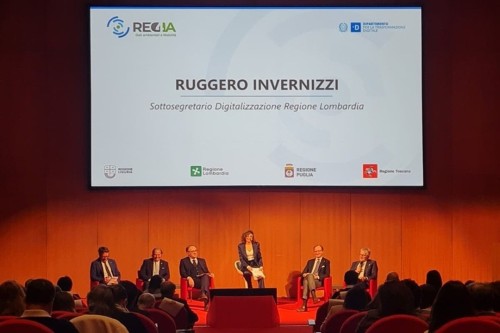
Lombardia capofila in Reg4IA — IA per monitorare ambiente e mobilità nella Pianura Padana

Arisa annuncia il tour estivo — 14 date e data zero a Civitanova Marche

Ticino, vendere casa senza agenzia non basta — la comunicazione immobiliare fà la differenza

Vendere o comprare casa in Ticino senza agenzie: la nuova linea di comunicazione immobiliare
